
The driveway area had settled, cracked and chipped. AWC completed a localized repair to the accessible affected section by lifting and resetting the section, adding support beneath accessible areas, filling accessible voids, preparing the damaged concrete, patching and shaping the surface, sealing visible cracks and cleaning the work area.
The existing area was inspected
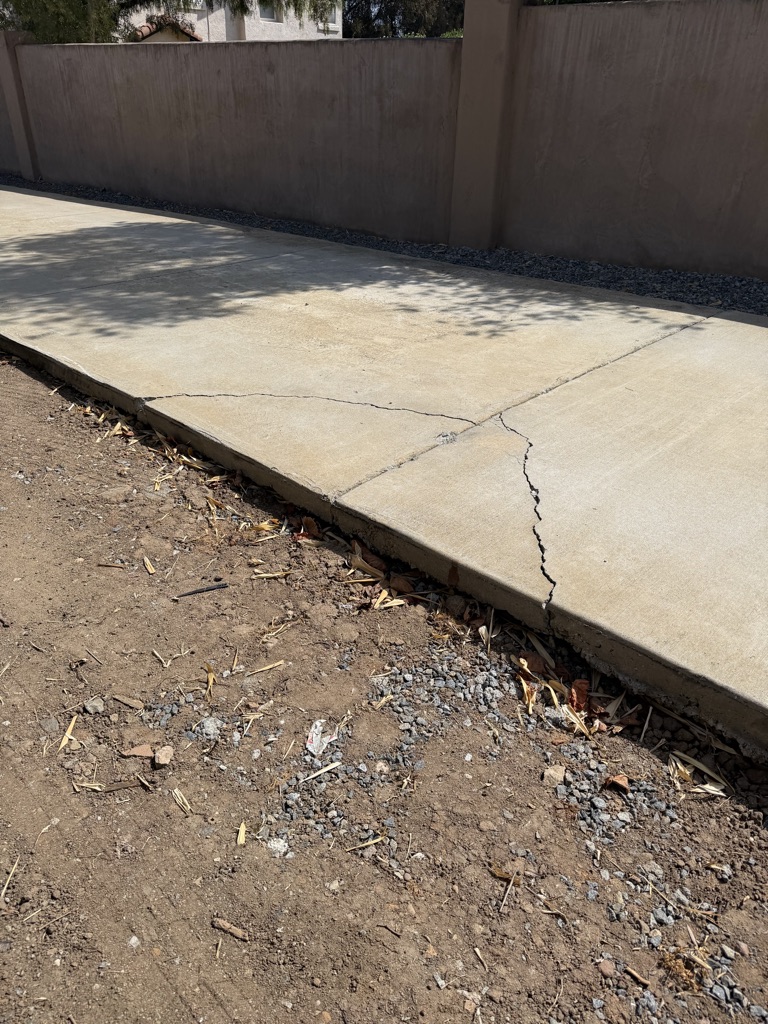
AWC inspected the settled, cracked and chipped driveway area. The first photo shows the existing cracked edge before the localized work. The completed-work record supports a repair to the accessible affected section; it does not describe replacement of the broader driveway.
The accessible section was lifted and supported
The accessible affected section was lifted and reset. AWC added support material beneath the slab and filled accessible voids. The record limits those actions to areas that could be reached during this repair, which is useful context when comparing a localized repair with a wider removal-and-replacement option on a future project.
Loose material was removed before patching
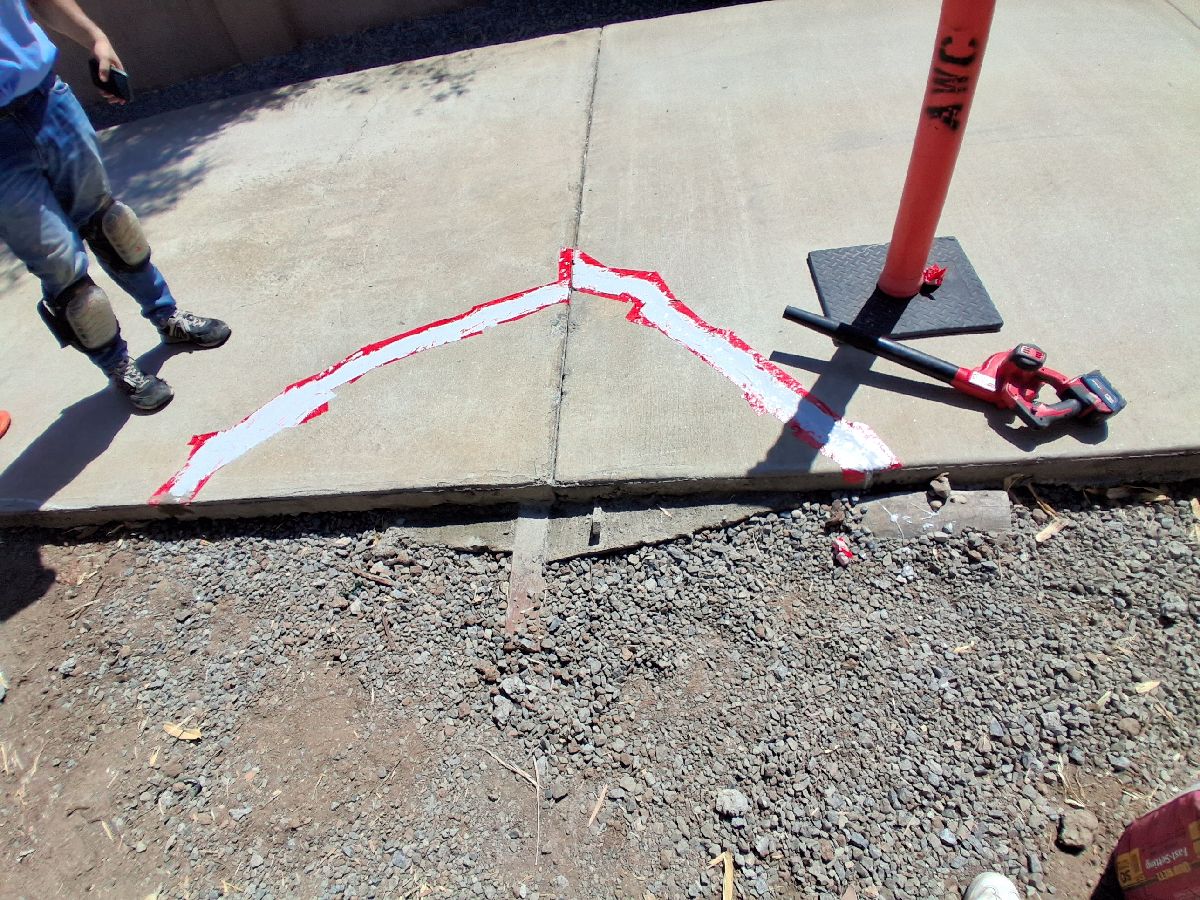
AWC cleaned loose material from the repair area and applied bonding treatment. The in-progress photo shows prepared and treated crack lines with repair materials, tools and traffic-control equipment in the work area. It documents an active repair stage rather than the final appearance.
The repair was patched, shaped and sealed
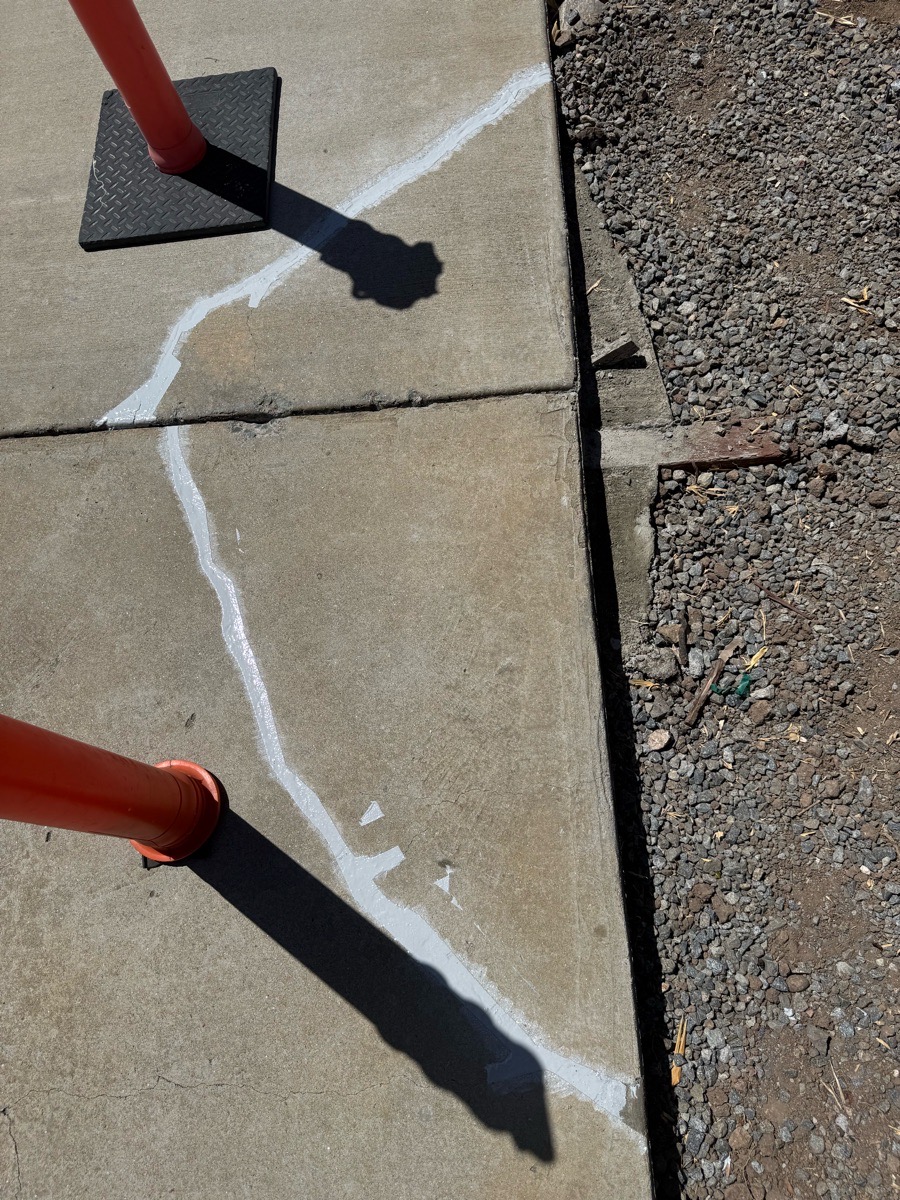
AWC patched and shaped the worked area so it was substantially level with the surrounding concrete. Visible cracking within the repair was sealed, and an additional small patch was completed. The later photo shows the light-colored repair treatment following the worked lines while cones remain in place. The localized treatment remains visible against the older concrete.
What to decide on a future localized repair
Before approving similar work, ask the proposal to identify the accessible repair area, retained concrete, support and void work included, preparation, patch appearance, curing protection, project-specific reopening direction and the point for approving a wider scope if field conditions differ. Use those answers to compare the options for your property.
Use this example to choose the next step.
Compare repair and replacement scope, or ask AWC about a site evaluation for the actual area.